
30,000 Protests In Just 48 Hours? Rahul Gandhi’s Satyagraha Platform Draws Nationwide Response
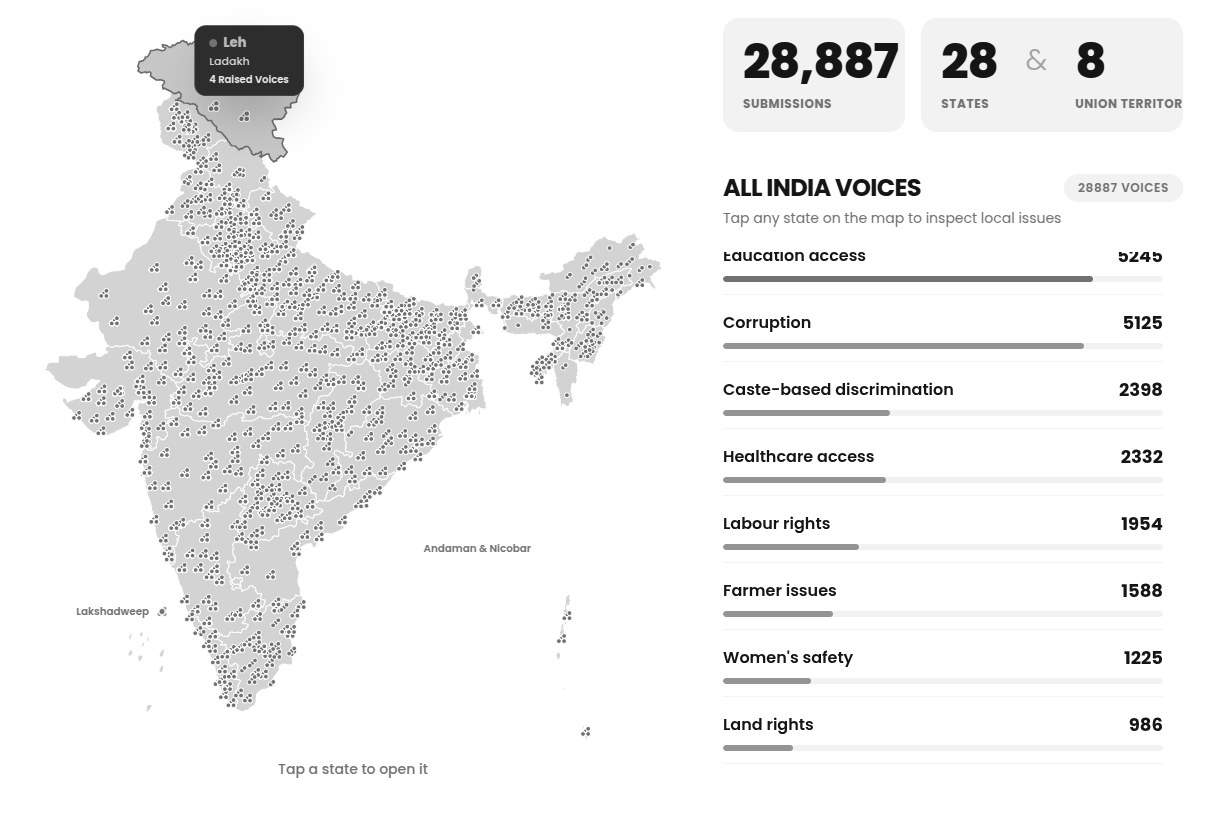
Maharashtra Congress president Harshwardhan Sapkal on Monday claimed that nearly 30,000 protests and agitations had been registered on Rahul Gandhi’s newly launched ‘Satyagraha’ platform within two days, highlighting the early response to an initiative aimed at giving scattered public movements a common digital voice.
Gandhi launched the platform on October 3, a day after Mahatma Gandhi’s 157th birth anniversary, with the aim of bringing together people and groups raising issues across the country. The platform allows users to register their struggles, describe their concerns and find similar movements through an interactive map.
The idea could prove useful for movements that often operate in isolation, allowing concerns raised by students, farmers, workers, women, Dalits, Adivasis and others to become more visible and easier to connect with similar campaigns elsewhere. Issues submitted so far have included education, corruption, social justice, farming, labour, healthcare, women's safety, land and the environment.
Gandhi said shortly after the launch that more than 10,000 people and groups had come forward within nine hours, and said his team would examine submissions, seek further information where required and explore ways of supporting genuine movements. He has described Satyagraha as a long-term initiative rather than a short-lived campaign.
The platform has already featured movements such as that of Maharashtra Public Service Commission aspirants, who have raised concerns over recruitment, alleged paper leaks and vacant government posts.
At the same time, the 30,000 figure needs to be understood in context. The Congress has not publicly provided a breakdown showing how many registrations represent distinct, independently verified and currently active protests on the ground, or whether multiple submissions concerning the same movement are consolidated.
That distinction does not diminish the potential usefulness of the platform. If maintained transparently, Satyagraha could become a way of connecting local grievances, amplifying issues that might otherwise remain unnoticed and helping different movements find common ground.
For now, its significance lies not only in the number of registrations, but in whether those digital voices can translate into greater visibility, dialogue and meaningful action on the issues people are raising.