
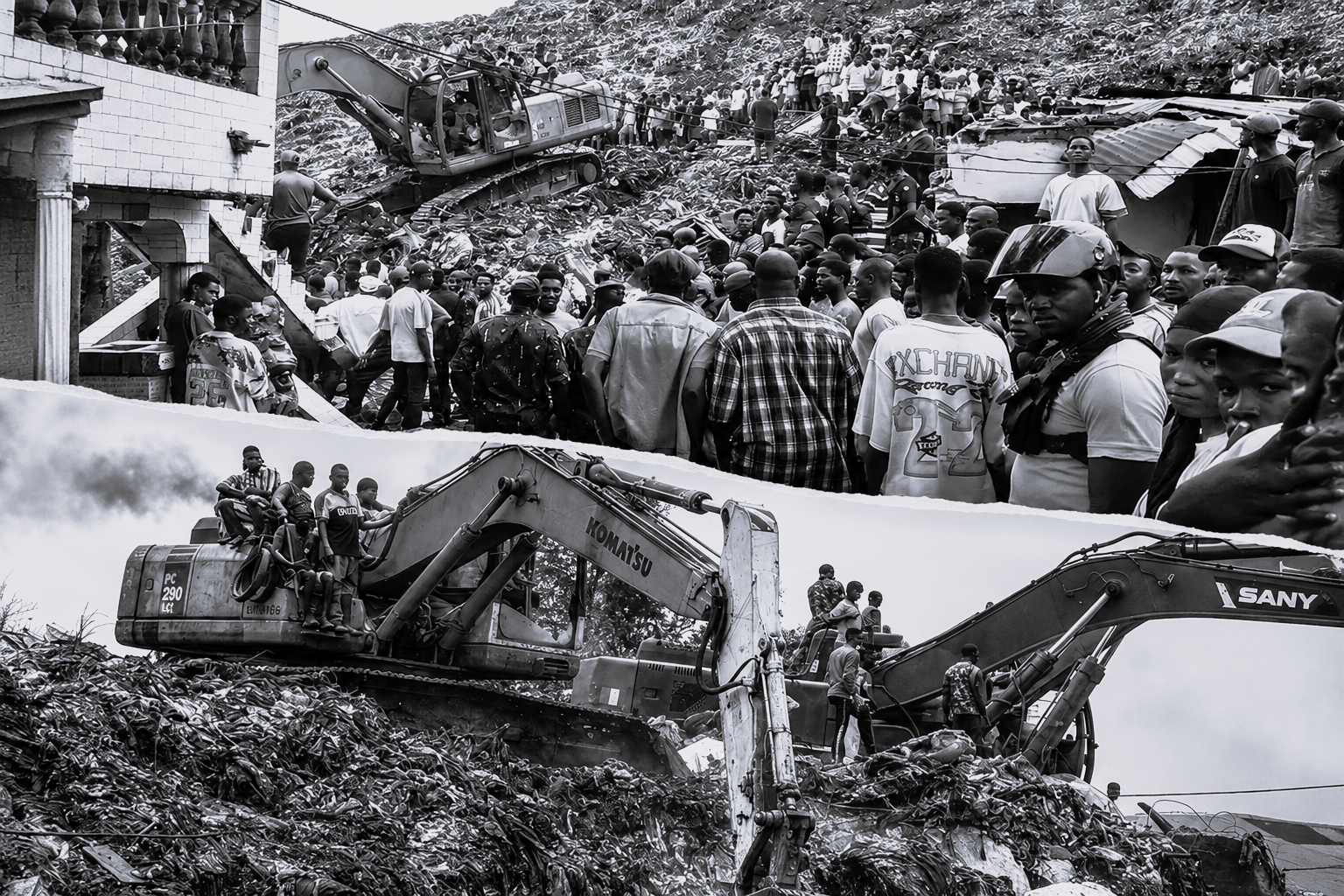
30 Dead as Guinea Landfill Collapses After Heavy Rains in Conakry
At least 30 people were killed after a massive mound of waste collapsed at the Dar Es Salam landfill in Conakry, Guinea’s capital, early Sunday, burying nearby homes, shacks and tents under tonnes of refuse. The disaster struck at around 2 a.m., when heavy rains swept over the enormous waste heap and triggered a landslide in the Gbessia commune. Authorities said six people were seriously injured, while 16 others suffered minor injuries, and several homes were destroyed. Search-and-rescue teams, supported by excavators, were deployed to clear the debris and search for survivors.
The collapse occurred at Conakry’s largest open-air waste dump, making the tragedy particularly significant because authorities had already identified the site as a major safety risk. Lt. Col. Baldé Mamadou Bailo, sanitation officer for the military engineering battalion, said the landfill had been designated for closure on Sunday, the same day the disaster occurred. The government had also issued eviction notices to people living around the landfill, forcing many families to leave, although numerous residents were still in the area when the waste mound collapsed.
The government’s decision to close the landfill had been driven by concerns over its condition during the rainy season. The disaster has therefore raised questions about whether evacuation and safety measures were implemented quickly enough to protect people living beside the unstable site. Dienabou Touré, minister of territorial administration and decentralisation, said authorities would ensure that the remaining families were relocated elsewhere.
The scale of the human tragedy was underscored by the account of Cire Diallo, who said she lost all five of her children in the collapse. Rescue workers continued searching through the vast mound of refuse as families waited for information about missing relatives. Prime Minister Amadou Oury Bah visited the site to oversee the response, while authorities mobilised personnel and equipment for rescue and recovery operations.
The disaster also revives concerns over the landfill’s history. In 2017, heavy rains triggered another collapse at Dar Es Salam, killing at least eight people and burying nearby houses. The recurrence highlights the longstanding danger posed by the site and the risks of maintaining a huge waste mound close to residential communities.
While heavy rainfall was the immediate trigger, the catastrophe also exposes deeper problems involving waste management, urban planning, poverty and inadequate infrastructure. Guinea is rich in natural resources, including bauxite and iron ore, yet many residents remain economically vulnerable. The tragedy now places greater urgency on the government's plans to close the landfill, relocate remaining families and establish a safer system for managing Conakry’s growing waste burden.