
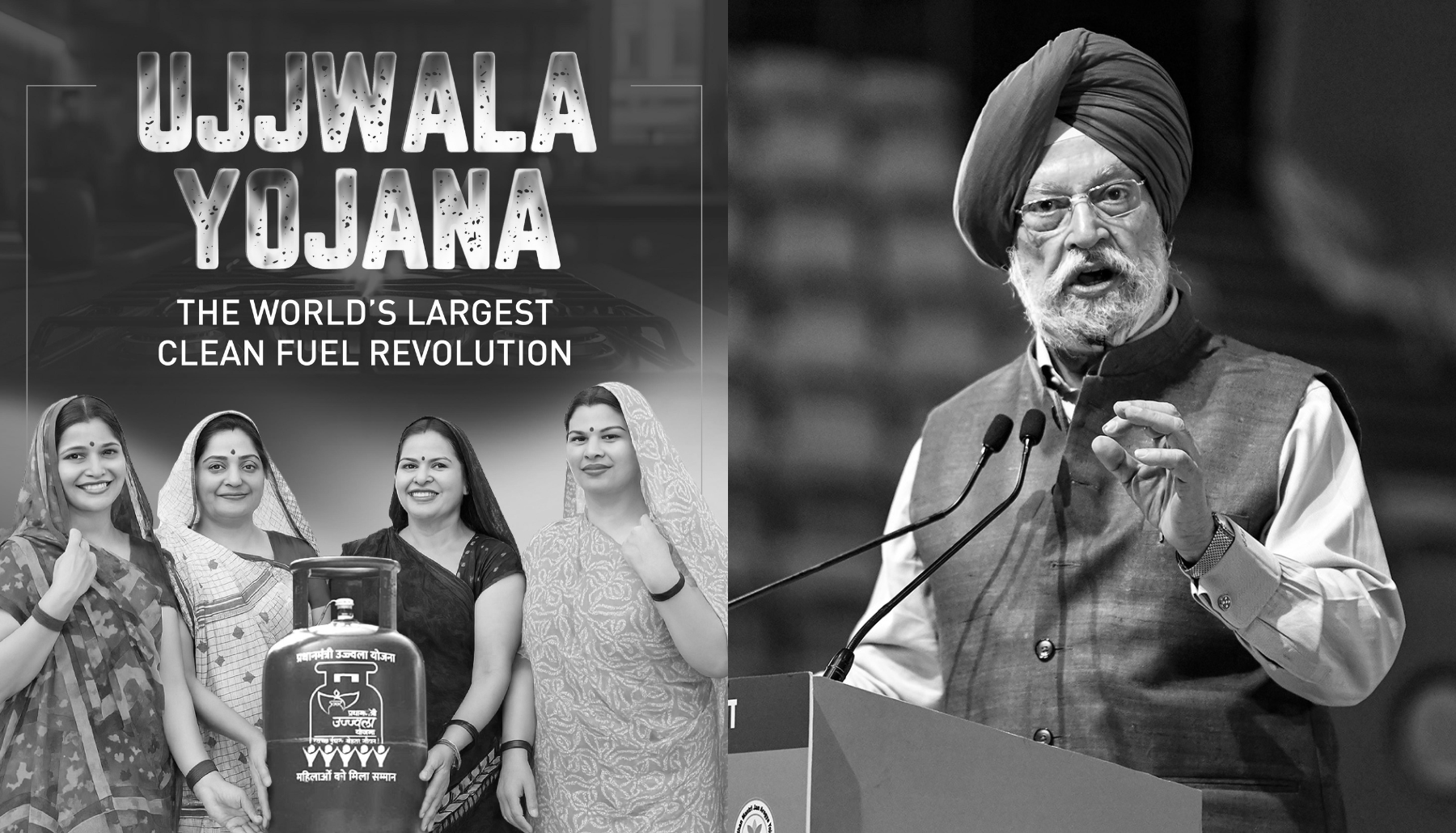
25 lakh new LPG connections under Ujjwala, a festive gift or a half-burnt revolution?
Union Petroleum Minister Hardeep Singh Puri on Monday announced that the Centre will distribute 25 lakh free LPG connections under the Pradhan Mantri Ujjwala Yojana (PMUY) during the Navratri festival. With this addition, the total number of Ujjwala beneficiaries will touch 10.60 crore households across India.
According to the minister, the government will spend ₹2,050 per connection, covering the cost of the LPG cylinder, stove, regulator, hose, and installation. Beneficiaries will also continue to receive a ₹300 subsidy per refill, bringing the cost of a cylinder down to ₹553 for Ujjwala families, lower than in many LPG-producing nations.
Puri linked the announcement to Navratri, saying the decision was a “great gift to women’s power” and compared Prime Minister Modi’s welfare schemes to the spirit of Goddess Durga. “The Ujjwala scheme is not just about gas connections,it is a torch of a massive revolution that has brightened kitchens and empowered women,” he said.
But the picture on the ground tells a more complex story. While Ujjwala has expanded access to clean fuel, the real challenge lies in affordability of refills. Studies and reports from several states show that many poor families, despite having LPG connections, still return to firewood or cow dung cakes once their first free cylinder is exhausted. For them, even a subsidised ₹553 refill is a significant expense compared to freely available traditional fuels.
This raises a practical question: if the government is already spending heavily on providing free connections, why not offer a full subsidy on refills for families that truly need it? Such targeted support could ensure that the Ujjwala revolution reaches those who otherwise cannot afford to keep their kitchens smoke-free.
The timing of the announcement also invites scrutiny. Releasing 25 lakh fresh connections during Navratri,when women’s strength and sacrifice are celebrated,creates powerful symbolism. However, the festive announcements often serve more as political optics than long-term solutions to women’s empowerment and health.
Launched in 2016, the Ujjwala Yojana was designed to replace smoky kitchens with clean fuel, dignity, and better health for rural women. Nearly a decade later, its impact is visible but uneven,caught between policy intent, cultural symbolism, and ground-level economic realities.