
2.4 Million Afghan Girls Barred From Secondary School Five Years After Taliban Takeover: UN
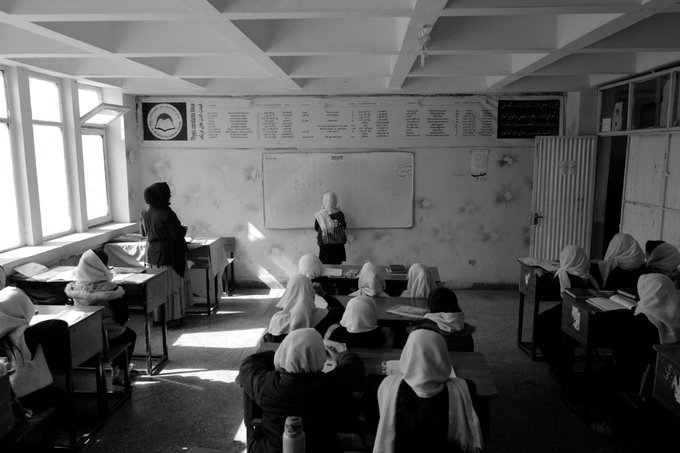
Nearly five years after the Taliban returned to power in Afghanistan, an estimated 2.4 million girls remain shut out of secondary education, UNESCO said, warning that the continued ban is reversing years of progress and could have lasting effects on the country.
Afghanistan is now the only country in the world where girls and women are formally barred from secondary and higher education, according to UNESCO. The agency has called for the restrictions to be lifted immediately and without conditions.
The Taliban seized power on August 15, 2021, as US and NATO forces completed their withdrawal after two decades of war. Girls' secondary schools were closed in March 2022. The ban was later extended to universities, with women stopped from attending higher education in December 2022. The restrictions, which were presented as temporary, remain in place.
Hoda Jaberian, UNESCO's programme coordinator for education in emergencies, said five years was far more than a short break in schooling.
“Five years is not a temporary interruption in a child's education. It is clearly almost an entire secondary school cycle,” she said.
UNESCO said the number of girls denied secondary education has risen by 200,000 from last year's estimate. If the restrictions continue, the figure could approach 4 million by 2030, as more girls reach the age for secondary school.
The damage extends beyond students. UNESCO estimates Afghanistan could face a shortage of more than 11,000 qualified female teachers by 2030 because women are also being denied higher education. The lack of female teachers could further weaken access to education, particularly for girls in areas where families prefer female teachers.
Afghanistan is also facing a wider education crisis. More than 2 million primary school children are out of school for reasons beyond the Taliban's restrictions on girls and women. UNESCO has also warned of very poor learning outcomes, with about 90 per cent of 10-year-olds unable to read a simple text. Overcrowded schools, limited facilities, poverty and natural disasters are adding to the pressure on the education system.
Before the Taliban takeover, Afghanistan had made major gains in girls' education. Nearly 1 million girls were enrolled in secondary school in 2021, compared with severely limited access in 2001. UNESCO says much of that progress has now been reversed.
The long-term economic cost could also be severe. UNESCO estimates that restrictions on women's higher education could result in about $9.6 billion in lost income by 2066 and push around 600,000 women out of the workforce over the longer term.
UNICEF has separately warned that Afghanistan could lose more than 25,000 female teachers and health workers by 2030 if restrictions on women's education and employment continue.
Despite the restrictions, UNESCO continues to support community-based education, literacy and skills programmes. Some classes are held in community spaces and homes, allowing girls and women to continue learning. But the agency has stressed that such programmes cannot replace formal secondary and higher education.