
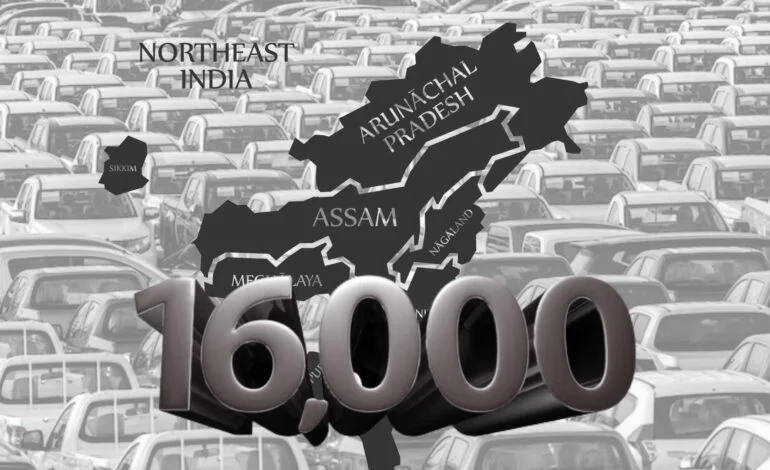
16,000 vehicles with duplicate IDs: CAG report exposes Northeast transport chaos
Nearly 16,000 vehicles across seven Northeastern states have been registered with the same chassis and engine numbers , highlighting significant irregularities in the region’s transport sector, according to a recent Comptroller and Auditor General (CAG) report . The report, examining State Revenues of Assam for the period ending March 2024, also revealed that only 26,000 transport vehicle permits were issued against nearly 1.2 lakh registered vehicles between 2019 and 2024 .
The audit found that out of the 15,849 vehicles with duplicate chassis and engine numbers, 12,112 vehicles (76%) were allowed registration in Assam without any No Objection Certificate (NOC) , a clear breach of protocol. A chassis number acts as a vehicle’s unique identity, like its fingerprint, so multiple vehicles sharing the same number makes legal tracking, taxation, insurance, and safety enforcement impossible. The CAG flagged significant deficiencies in the issuance of transport vehicle permits across eight test-checked District Transport Offices (DTOs) , pointing out that only 21.87% of vehicles had permits issued. These gaps have resulted in revenue losses, regulatory loopholes, and a surge in unregulated commercial transport operations.
The report also noted tax irregularities. Out of 1.29 lakh commercial vehicles, 29,560 did not pay their Motor Vehicle (MV) tax , causing a tax deficit of ₹61.28 crore and accumulating fines of ₹24.53 crore. Delays in fine collection for 1.51 lakh vehicles in selected districts further cost the exchequer ₹3.79 crore.
Serious lapses were observed in school bus permits, which were issued as contract carriage permits instead of the mandatory Educational Institution Bus (EIB) permits , bypassing necessary fitness tests. Licensing procedures were also flawed: 7.85% of Learners and Driving Licenses lacked driving test dates, while audit of test slots revealed improbably high daily testing numbers in over half the cases, suggesting compromised evaluation standards.
Other systemic inefficiencies included delays in vehicle registration at dealer points, ranging from 1 to 1,417 days , and incomplete linkage of addresses for 35% of registered vehicles. Out of 72 sampled migrated vehicles, 55 remained registered in two states, causing tax and enforcement discrepancies. Non-imposition of penalties on 4,200 delayed reassignments led to ₹6.42 crore revenue loss, while outstanding one-time tax (OTT) amounted to ₹23.80 crore from 1,396 vehicles .
The CAG also highlighted enforcement gaps: 64% of offence penalties (2,71,388 cases) remained uncollected, pollution control directives were poorly implemented, and the Transport Department’s workforce is inadequate to manage the rapidly increasing vehicular population, with vacancies ranging from 30-57%. The report stressed that manpower augmentation and stricter regulatory oversight are essential to ensure road safety, revenue compliance, and environmental standards.