
1,600 Km Apart, One Operation: How Robotic Telesurgery Is Redefining Indian Healthcare
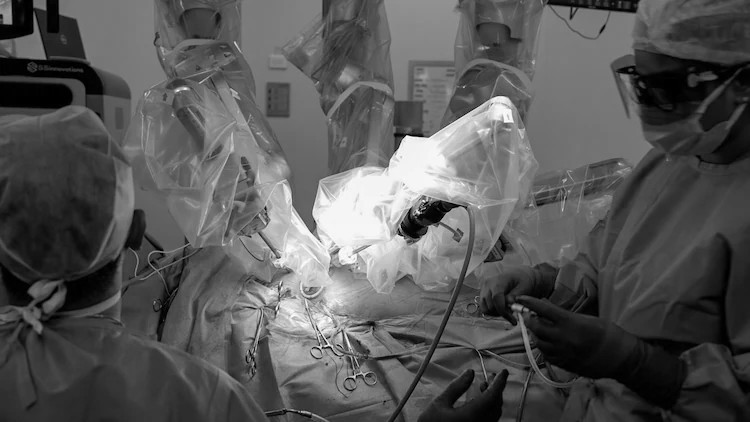
India’s first robotic urological telesurgery by a government hospital surgeon has highlighted how technology could reshape access to specialised healthcare. Dr Anup Kumar of VMMC and Safdarjung Hospital performed a complex Modified Lich-Gregoir ureteric reimplantation remotely from Gurugram on a 32-year-old woman at Preeti Kidney and Urology Hospital in Hyderabad, more than 1,600 km away. The procedure was completed smoothly using an advanced robotic system and high-speed communication technology.
The achievement is significant because it separates the location of the specialist from that of the patient. Dr Kumar operated through a robotic platform, while a medical team led by Dr Chandramohan Vaddi remained in Hyderabad to provide on-site assistance and patient care. Reliable, high-speed connectivity is central to such telesurgery because surgical commands, visual information and other data must move rapidly between locations, with minimal delay, for precise robotic control.
For India, the potential benefits are considerable. Robotic telesurgery could allow patients in smaller towns, rural districts and underserved regions to access specialist expertise concentrated in major medical centres. It could reduce the need for patients and families to undertake expensive, time-consuming journeys, while enabling scarce specialists to serve a wider population.
The model could also strengthen local hospitals by combining remote expertise with trained on-ground teams. In suitable cases, this may reduce treatment delays caused by referrals and transfers and help decentralise advanced surgical care.
Future applications could extend beyond urology to selected gastrointestinal, gynaecological, cardiac and other minimally invasive procedures, subject to clinical evidence and safety requirements. The same infrastructure could support remote surgical assistance, specialist consultations, training and mentoring.
However, widespread adoption will require dependable low-latency networks, backup connectivity, sophisticated robotic systems, cybersecurity, trained local teams, clear emergency protocols and appropriate regulatory frameworks.
Safdarjung’s milestone therefore represents more than a technological first. It points towards a healthcare system where specialised surgical expertise can travel digitally, potentially bringing advanced treatment closer to patients who face geographical and economic barriers, expanding equitable access to advanced specialist care nationwide.