
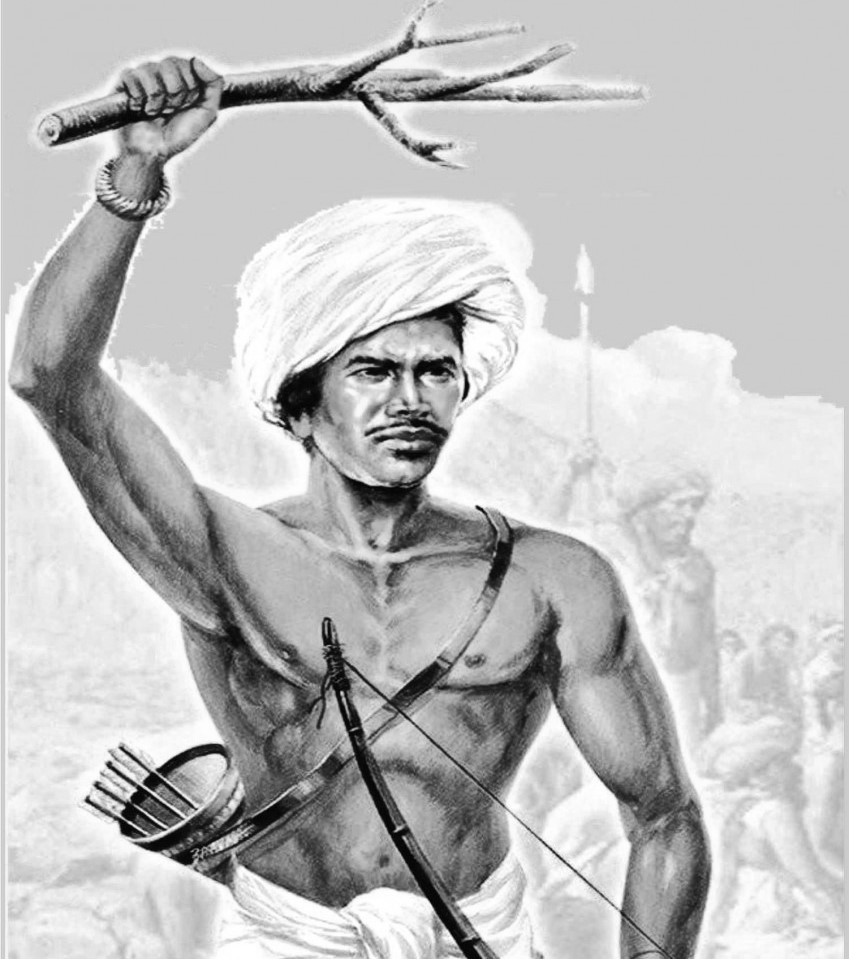
150 years of Birsa Munda: Courage, culture, and rights
On the 15th of this month, India paid tribute to Bhagwan Birsa Munda, the legendary tribal leader and freedom fighter fondly called “Dharti Aba,” on his 150th birth anniversary. The day, officially observed as Janjatiya Gaurav Divas (Tribal Pride Day) since 2021, coincides with Jharkhand’s 25th statehood anniversary, highlighting Birsa Munda’s enduring influence on tribal identity and the birth of the state.
President Droupadi Murmu led the central commemorations at Prerna Sthal, Parliament House, placing floral tributes at Birsa Munda’s statue. She described him as a “beacon of indigenous courage” whose principles of dignity, justice, and communal unity continue to inspire generations. Prime Minister Narendra Modi, paying tribute via X, called Birsa a “great hero of the freedom struggle” who dedicated his life to protecting the rights and welfare of tribal communities, adding that his “sacrifice and dedication will always inspire the people of India.” Vice-President C. P. Radhakrishnan said, “Birsa Munda’s fight for tribal dignity and self-respect is a lesson for all. His legacy guides our path toward empowerment.”
Jharkhand Chief Minister Hemant Soren garlanded Birsa Munda’s statue alongside Governor Santosh Gangwar, highlighting that Birsa’s ideals “will always show the path of patriotism and struggle against injustice.” On X, Soren wrote: “All the residents of Jharkhand bow in reverence to their valiant son, Dharti Aba Bhagwan Birsa Munda. By following his ideals, our brave martyrs realised the vision of a separate Jharkhand state… Johar Dharti Aba.”
Across Jharkhand and India, the anniversary was marked by vibrant cultural celebrations. Tribal groups organized folk dances, performances, exhibitions, and youth rallies under the banner “Our Land, Our Rights.” Schools conducted special assemblies, and statues in towns and villages were garlanded, reminding communities that Birsa’s struggle remains relevant in the fight for land rights, forest protection, and preservation of tribal culture.
Born in 1875, Birsa Munda led the Ulgulan (Great Tumult) of 1899-1900, uniting Munda, Oraon, Kharia, and Ho communities against forced labor, unfair taxation, and land seizures. He championed the khuntkatti system, which recognized communal land ownership, and his efforts inspired the Chotanagpur Tenancy Act (1908), a landmark law still critical for protecting tribal land rights. Beyond politics, he was a social and spiritual reformer, founding the Birsait faith, promoting education, cultural pride, and unity while resisting superstition and colonial influence.
The Ministry of Tribal Affairs is further commemorating Birsa Munda and other tribal freedom fighters through initiatives such as the establishment of 11 Tribal Freedom Fighters Museums across India. Notable museums already inaugurated include the Shaheed Veer Narayan Singh Memorial & Tribal Freedom Fighters Museum in Raipur, Chhattisgarh, and the Bhagwan Birsa Munda Tribal Freedom Fighter Museum in Ranchi, Jharkhand. These museums document tribal uprisings, leaders, and cultural heritage, with exhibits ranging from sculptures and galleries to digital installations and interactive learning tools.
In addition, the Ministry promotes tribal art, language, and traditions through digital platforms like Adi Sanskriti, Adi Vaani, and the Tribal Digital Document Repository, aiming to preserve indigenous knowledge, folklore, and languages such as Mundari, Bhili, Gondi, Santhali, Garo, and Kui. Nationwide events during the ongoing Janjatiya Gaurav Varsh include workshops, cultural festivals, symposiums, and competitions highlighting tribal heritage and achievements.
Observing Birsa Munda’s anniversary is more than remembering history. Tributes from President Murmu, Prime Minister Modi, Vice-President Radhakrishnan, and Jharkhand CM Hemant Soren reaffirm that his vision of dignity, self-rule, and land rights remains a living ideal. For tribal communities, remembering Birsa is both a celebration and a call to continue the fight for identity, justice, and empowerment, a struggle that remains central to India’s social, cultural, and political life.