
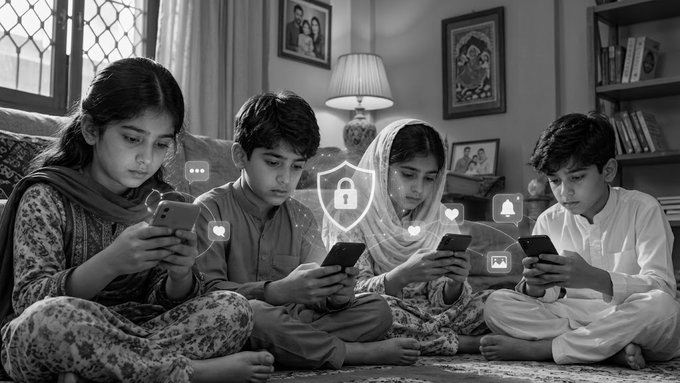
1.5 Million Pakistani Children Face Online Sexual Abuse, Study Finds
Around 1.5 million children who use the internet in Pakistan experienced at least one form of technology-facilitated sexual exploitation or abuse in a single year, according to a new study by UNICEF, ECPAT International and INTERPOL, highlighting serious gaps in child protection and reporting systems.
Published in September 2026, the report, titled Disrupting Harm in Pakistan, found that nearly one in 16 internet-using children aged 12 to 17 experienced online sexual abuse. The research drew on a nationally representative household survey of children and their parents or caregivers, interviews with frontline and justice professionals, and an analysis of relevant laws and policies.
The findings challenge the perception that online abuse is primarily committed by strangers. In 85 per cent of reported incidents, the perpetrator was someone the child already knew. Social media accounted for 44 per cent of reported instances, making it the most commonly identified digital setting for abuse.
The incidents included unwanted sexual images or conversations, demands for intimate photographs, the non-consensual sharing of children's images, and sexual threats or blackmail. The report also highlights emerging risks from artificial intelligence-generated sexual material and other forms of digital exploitation.
Despite the scale of the problem, more than half of the affected children did not tell anyone about their experiences. None of those surveyed reported abuse through formal channels such as helplines, social workers or the police. Fear of blame, humiliation and restrictions imposed by families can discourage victims from seeking help. Girls and boys experienced abuse at similar rates, although their experiences and barriers to disclosure could differ.
The study identified weaknesses in Pakistan's legal and child-protection systems. These include the absence of a requirement for child forensic interviews to be systematically conducted by specially trained professionals, increasing the risk of further distress during investigations. It also flagged outdated terminology in the country's Prevention of Electronic Crimes Act concerning child sexual abuse material.
Separately, UN Secretary-General's Special Representative on Violence Against Children Najat Maalla M'jid warned on Monday that AI was creating new avenues for child sexual exploitation, cyberbullying, deepfakes and the recruitment of children into criminal activities.
Presenting her final report to the UN General Assembly, she said nearly 45 million children were displaced by conflict and natural disasters, with the climate crisis adding to the challenges. Her presentation marked 20 years since the first UN global study on violence against children.