
132,000 Killed After Colombia’s Peace Deal, as New President Vows Security Crackdown
Colombia’s 2016 peace agreement with its largest rebel group has failed to deliver lasting peace, with 132,930 people killed and armed group membership rising from 6,000 to nearly 30,000 over the decade, the country’s new government told the United Nations Security Council on Monday.
Foreign Minister Omar Bula, addressing the council for the first time, said the figures challenged the international portrayal of the agreement as a model for resolving conflicts. He said lasting peace remained elusive under conservative President Abelardo de la Espriella, who took office in August.
“The ideological and international promotion of the peace agreement as an exemplary event worthy of emulation is not borne out by the figures,” Bula said. The government’s figures could not be independently verified.
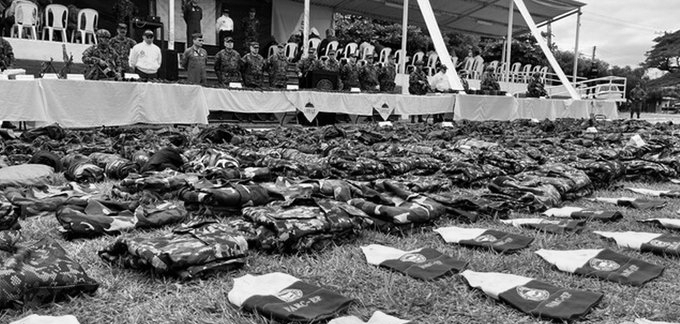
Signed in July 2016, the agreement between the government and the Revolutionary Armed Forces of Colombia (FARC) ended more than 50 years of conflict that killed over 220,000 people and displaced nearly six million. An estimated 14,000 fighters surrendered their weapons following the deal.
However, Bula said Colombia recorded 132,930 killings between the agreement’s signing and August 2026, alongside nearly 100,000 extortion cases and more than 2,750 kidnappings.
The country continues to face violence involving the National Liberation Army (ELN), the Clan del Golfo cartel, factions of former FARC rebels and regional and transnational criminal networks. These groups compete for territorial control, using violence, extortion and illicit economies to dominate communities and strategic routes.
Drug trafficking remains a major driver of the violence. Bula said global drug trafficking had reached unprecedented levels and that Colombia’s coca production surged by more than 50% in 2023.
De la Espriella, a Colombian-American who calls himself “The Tiger” and supports US President Donald Trump, has pledged to abandon former leftist president Gustavo Petro’s approach of negotiating with armed groups. He argues that the peace process has failed.
During the new administration’s first 60 days, security forces reported 32,029 arrests, the seizure of more than 135 tonnes of narcotics and the removal of 3,414 firearms from circulation. The president also signed 119 extradition orders targeting international drug networks and organised crime.
Bula said the government aimed to restore state control, weaken armed groups and rebuild security and justice in areas dominated by criminal organisations.
The UN Security Council continues to monitor implementation of the 2016 peace accord at Colombia’s request. The mandate of the UN verification mission is due to expire on October 31, leaving the agreement’s implementation under continued international scrutiny.