
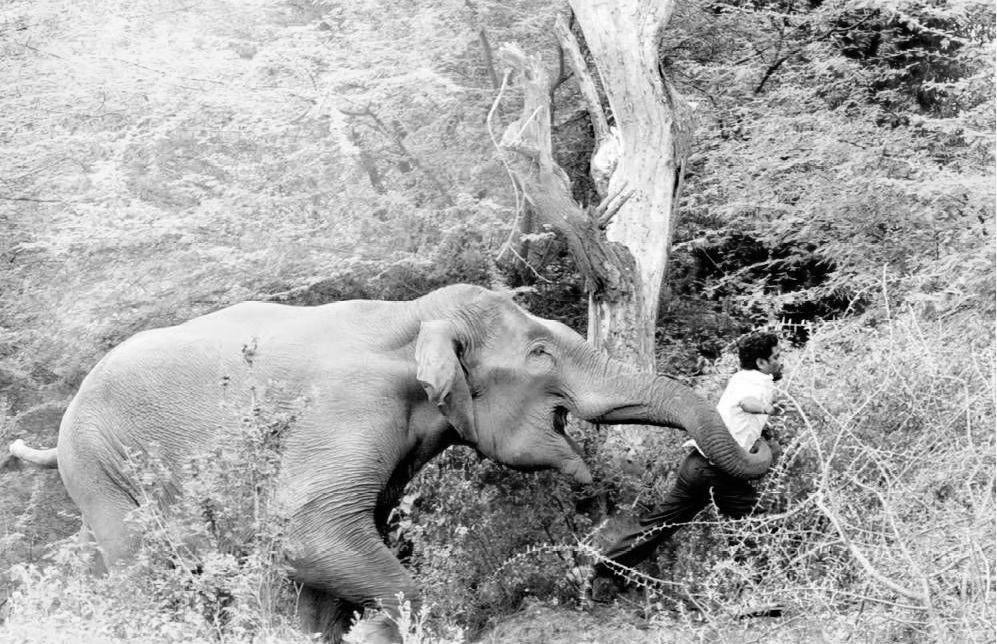
"13 killed in Jharkhand in rare, deadly two-day elephant rampage"
A rogue wild elephant killed 13 people and injured four others in separate attacks over the past two days in Jharkhand’s West Singhbhum district, triggering widespread panic and once again underscoring the growing challenge of human–elephant conflict in the Kolhan region.
According to forest officials, the tusker entered areas under the Noamundi and Hatgamharia police station limits late on Tuesday and trampled six people to death , including four members of a family. The same elephant had killed seven people, including three from one family, a day earlier in the Kolhan region.
Chaibasa Divisional Forest Officer Aditya Narayan said teams of forest personnel, along with elephant management experts from West Bengal’s Bankura district, have been deployed to track and drive the animal back into forested areas. “Efforts are underway to prevent further casualties,” he said.
The elephant’s movement has also disrupted rail traffic, with six pairs of trains cancelled in the Chakradharpur division of South Eastern Railway as a precautionary measure.
A conflict-prone region
The Kolhan belt, comprising West Singhbhum and adjoining districts , is among Jharkhand’s most vulnerable zones for human–elephant conflict. Experts attribute frequent incidents to shrinking forest cover, mining activity, railway lines cutting through elephant corridors, and villages located along traditional migration routes connecting Jharkhand with Odisha and West Bengal.
Degraded forests and lack of water sources often force elephants to venture into human settlements in search of food, particularly during harvest seasons, increasing the risk of fatal encounters.
Political reactions and relief demands
BJP leader and former Jharkhand chief minister Madhu Koda criticised the forest department for what he described as a failure to adopt long-term solutions. Visiting the families of victims in Noamundi, he said earlier practices such as distributing torches and firecrackers to village committees to alert residents had been discontinued.
He demanded immediate compensation for affected families, rehabilitation of those injured, and long-term support for children orphaned in the attacks, including government-funded education and guardianship assistance.
Need for rehabilitation and long-term measures
Officials and conservationists stress that beyond compensation, affected families require medical care, psychological counselling, livelihood support and educational assistance for children. Orphaned minors, in particular, need sustained state support to prevent long-term social and economic hardship.
Experts also emphasise the need for durable solutions, including protection of elephant corridors, restoration of forest habitats, real-time tracking and early-warning systems, village-level safety infrastructure such as solar fencing, and coordinated planning among Jharkhand, Odisha and West Bengal.
Unless habitat loss and unplanned development are addressed, they warn, such deadly encounters are likely to recur, placing both human lives and wildlife at continued risk.