
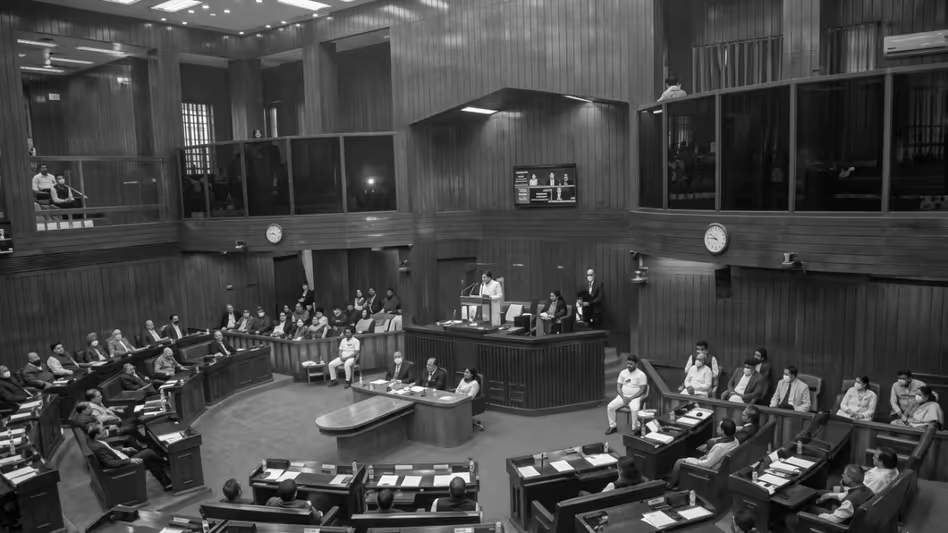
10 government Bills cleared in 28-day Mizoram Assembly session
The Mizoram Legislative Assembly passed 10 government Bills during its 28-day Budget session, with key measures aimed at social reform, land regulation, and regional development .
The session, which began on February 17, was adjourned sine die on Monday, with Speaker Lalbiakzama highlighting the House’s proceedings and maintaining that members upheld decorum throughout.
Among the most significant legislations was the Mizo Marriage and Inheritance of Property (Amendment) Bill, 2026 , which seeks to ban polygamy and strengthen women’s property rights . The move is expected to improve financial security for women and promote greater gender equality in society.
The Assembly also passed the Mizoram (Prevention of Public Land Encroachment) Bill, 2026 , aimed at curbing illegal occupation of government land and ensuring its availability for public infrastructure. While the law is likely to aid planned development, it may also impact those residing on encroached land.
Another key measure, the Mizoram State University (Amendment) Bill, 2026 , proposes shifting the university’s base from Aizawl to Lunglei. The decision reflects a push towards decentralised development , with Lunglei expected to benefit from improved educational access, job creation, and local economic growth, while easing pressure on the capital.
The House also adopted a resolution seeking inclusion of the Mizo language in the Eighth Schedule of the Constitution of India. If approved, it would grant the language national recognition , enabling wider use in education and administration, support for cultural preservation, and opportunities for candidates to use Mizo in competitive examinations.
During the session, the Assembly passed the state Budget for 2026–27, pegged at ₹17,469.91 crore, along with supplementary demands worth ₹3,724.25 crore for 2025–26, shaping expenditure on key sectors such as infrastructure, healthcare, and education.
In all, 1,248 starred and 396 unstarred questions were received, reflecting active legislative participation. The session underscored a broader policy focus on inclusive growth, gender equity, and balanced regional development .